


Branch
& Bloom
Psychiatry
Rooted in Evidence.
Guided by Compassion.
Shaped by Experience.
Bloom at Your Own Pace.
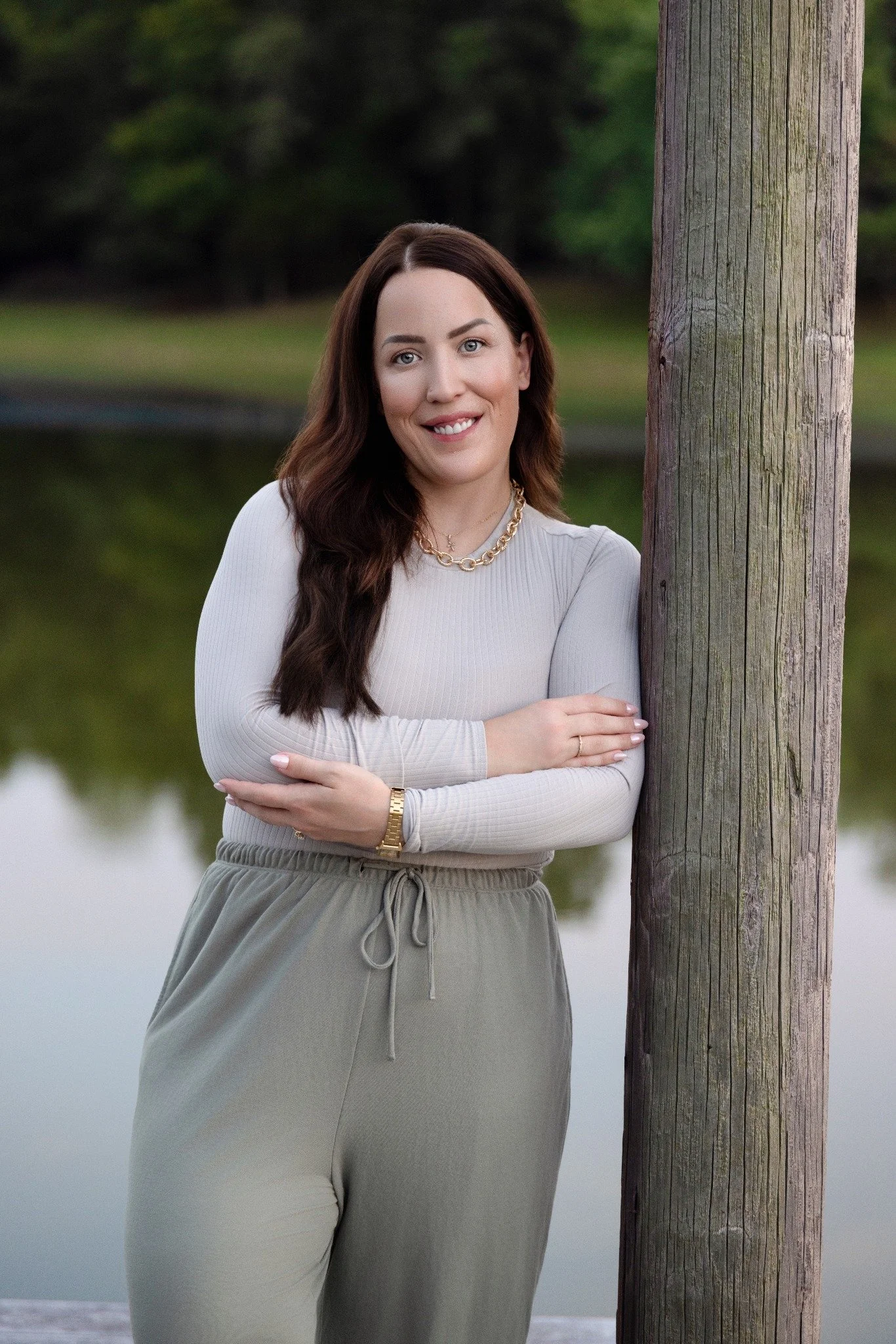
Meet Kimberly Tunell Haber, APRN, MSN, PMHNP-BC
Psychiatric Mental Health Nurse Practitioner & Founder
Hi, I'm Kimmie, and I'm so glad you're here!
Psychiatric Mental Health Nurse Practitioner • Founder of Branch & Bloom Psychiatry
Meet Kimmie
I have spent much of my career sitting with people during chapters of life they never expected to face—and wondering how different their stories might have been if someone had recognized their needs sooner.
My path into healthcare began when I worked as a detention officer. I met individuals who were receiving mental health care for the first time only after entering the correctional system. Many had spent years living with untreated mental illness, trauma, addiction, instability, or circumstances that had never been fully understood. Watching people finally receive care in that environment made me wonder how many lives might have taken a different direction if someone had stepped in earlier. That realization inspired me to become a nurse and eventually return to corrections in a nursing role.
This question was also personal. I grew up around family members affected by mental health challenges, addiction, and other destructive patterns. I have often wondered how different life might have been for them—and for everyone around them—if they had received the right treatment, resources, and support. Those experiences gave me compassion for both the individuals who are struggling and the families who love them.
My work eventually led me to the Department of Veterans Affairs. As the wife of a Veteran, serving this community was already deeply personal, but working at the VA gave me an even greater understanding of the stigma many Veterans carry around mental health. I met strong, capable people who had learned to remain stoic, minimize their pain, and keep moving forward even when they were struggling internally. Earning their trust and creating space for them to open up became some of the most meaningful work of my career.
During my time at the VA, I had the opportunity to shadow a psychiatric mental health nurse practitioner while supporting a Veteran experiencing a mental health crisis. In that moment, the direction of my career became clear. I knew I wanted to become the kind of provider who could recognize what was not being said, look beyond the surface, and help people feel safe enough to be honest about what they were carrying.
That calling became even more personal when my husband experienced a line-of-duty injury that unexpectedly ended his law-enforcement career. Becoming a police officer had been his goal since before his military service and since we first met; it was the career he expected to continue until retirement. Supporting him as he navigated the loss of that future showed me how profoundly an injury or unexpected transition can affect identity, purpose, family life, and mental health.
These experiences are what led me to psychiatric care. They continue to fuel my passion for reaching people earlier, reducing stigma, supporting families, and helping individuals find hope and purpose during some of life’s most difficult transitions.
My Approach to Care…
I provide collaborative, individualized care that considers the whole person—not simply a diagnosis or list of symptoms. I want to understand your experiences, physical health, lifestyle, strengths, concerns, and goals so we can create a treatment plan that genuinely fits your life.
My approach begins with looking at the broader picture. When clinically appropriate, this may include reviewing or ordering laboratory testing to identify physical factors that could contribute to mental health symptoms, discussing evidence-informed supplements, incorporating therapy and practical coping strategies, and coordinating with other members of your healthcare team. Pharmacogenomic testing may also be considered to provide additional information that can help guide medication decisions when appropriate.
Medication can be life-changing, but it is not automatically the first or only answer. When medication is recommended, we will discuss the potential benefits, risks, alternatives, and how it fits into your overall treatment plan.
You don’t need to arrive with the perfect explanation or have everything figured out. You can begin exactly where you are. My hope is that you leave each appointment feeling heard, supported, and more confident about the path ahead.
I look forward to hearing your story.
A Few Things About Me…
I have been married since 2015, and I am a proud boy mom. Marriage has taught me a lot about communication, compromise, growing through different seasons, and occasionally agreeing that some discussions should wait until everyone has eaten. Motherhood has taught me patience, humility, and that it’s possible to feel completely overwhelmed and deeply grateful at the same time. Sometimes, keeping everyone alive, fed, and mostly where they need to be absolutely counts as a successful day.
Our family loves being outdoors. We enjoy fishing, hunting, bike rides, and visiting our friends’ cattle farm. We also have chickens and previously ventured into raising goats.
Hiking is especially meaningful to me. Because I didn’t always have the ability to walk, every trail reminds me to appreciate what my body can do while I have the opportunity to do it.
I’m still campaigning for farm cats and a donkey. My husband has not fully committed to this expansion, but I remain committed to the vision.
My gardening style is best described as hopeful chaos. Throwing down a random assortment of seeds and seeing what survives feels much more realistic for me than maintaining a perfectly planned garden.
My ADHD brain loves structure. Lists, labels, planners, and organizational systems keep me on track—even if I occasionally need a list to manage my other lists.
My story didn’t begin easily. I grew up experiencing childhood abuse, food insecurity, addiction, and domestic violence. While those experiences are part of my story, they do not define who I became.
I understand what it means to start over. As a teenager, I experienced homelessness and couch-hopped between friends’ homes. It taught me that a difficult beginning does not have to determine how your story ends.
I know what it means to go without. As a teenager, there were times I stole food, tampons, and razors because I couldn’t afford basic necessities. Today, I’m grateful to be able to give back by helping my church prepare community suppers and donating essential items to domestic-violence shelters.
Domestic-violence advocacy is deeply personal to me. My dear friend—someone I taught to drive and supported as she became a new mother—was killed in a domestic-violence incident, leaving behind two young children. Her loss strengthened my commitment to helping others recognize abuse, create safety plans, and connect with supportive resources.
Dark humor is one of my coping skills. Sometimes life is heavy, and sometimes laughing at the absurdity of it helps us carry it.
Cursing is allowed. You don’t need to edit yourself or apologize for being human in my office. I’m married to a Marine and have worked in jails and prisons—so I can assure you that I’ve heard worse. I do own a filter and can use it when necessary—but this is your safe space, so you don’t need to use yours for my comfort.
I love early Adam Sandler movies—and sometimes dress like him. Oversized T-shirts, basketball shorts, and comfortable shoes are a lifestyle, not a lack of effort.
Being a boy mom has given me a surprising appreciation for video games. Our family also enjoys card games, board games, and the completely calm, conflict-free process of agreeing on who gets to go first.
I eat entirely too much sourdough bread. Fortunately, my husband makes it, which has significantly reduced my farmers' market bread budget—or at least created more room in the budget for other great finds that support small businesses.
When all else fails, there’s iced coffee. It may not solve the problem, but it does make reviewing the list of possible solutions more enjoyable.